
The Allure of Speed
There is a particular glamour that belongs to Formula 1.
A driver steps out of the chassis to come running to the team. Sweat dripping down his face. Racing suits open at the collar, sunlight across the paddock, engines somewhere behind him as he steps up onto the podium. Then the glasses go on.
Formula 1’s official World Championship began in 1950, with its first race held at Silverstone, UK. With Juan Manuel Fangio dominating the decade, securing 5 world titles, a title which held onto its champion for nearly 40 years. What started as a largely European championship soon grew into the highest level of international single-seater racing, expanding across continents while continuously reshaping what a racing car could be.
But Formula 1 was never only about the cars.
Through the 1960s, ’70s, ’80s and ’90s, it developed an aesthetic of its own: experimental engineering, bold liveries, European circuits, team uniforms, celebrity spectators and drivers whose identities became recognizable far beyond the cockpit.
By the 1970s, the sport had entered one of its most visually iconic eras. Renault introduced turbocharged engines in 1977, revolutionising the sport. Racing was dangerous, glamorous and increasingly public. Drivers appeared not only in helmets and racing suits, but in candid paddock photographs and press images. Hunt and Lauda’s famous fight for the championship was later depicted in the movie Rush. Large aviators and tinted lenses felt completely at home beside the machines—functional, understated and unmistakably cool.
Then the technology accelerated.
The 1980s brought increasingly sophisticated aerodynamics, and the turbocharged engines pushed beyond 1,000 horsepower with other major innovations in car construction. It consisted of one of the most famous rivalries between Senna and Prost. The sport’s visual language became sharper alongside it. Racing cars grew more technical; fashion around the paddock followed with angular shapes, darker lenses and more engineered silhouettes.
By the 1990s, Formula 1 had become a truly global spectacle. The cars looked sleeker, the branding stronger, and performance design increasingly futuristic with hybrid engines becoming the new standard. Wraparound frames and sculpted silhouettes echoed the same fascination with aerodynamics and movement.
It is easy to see why eyewear belongs so naturally to this world.
Part of it is practical. Race weekends mean long hours outdoors, glare and constant exposure to bright conditions. Sunglasses provide protection and comfort, and they remain a familiar part of modern paddock style today.
But there is something else.
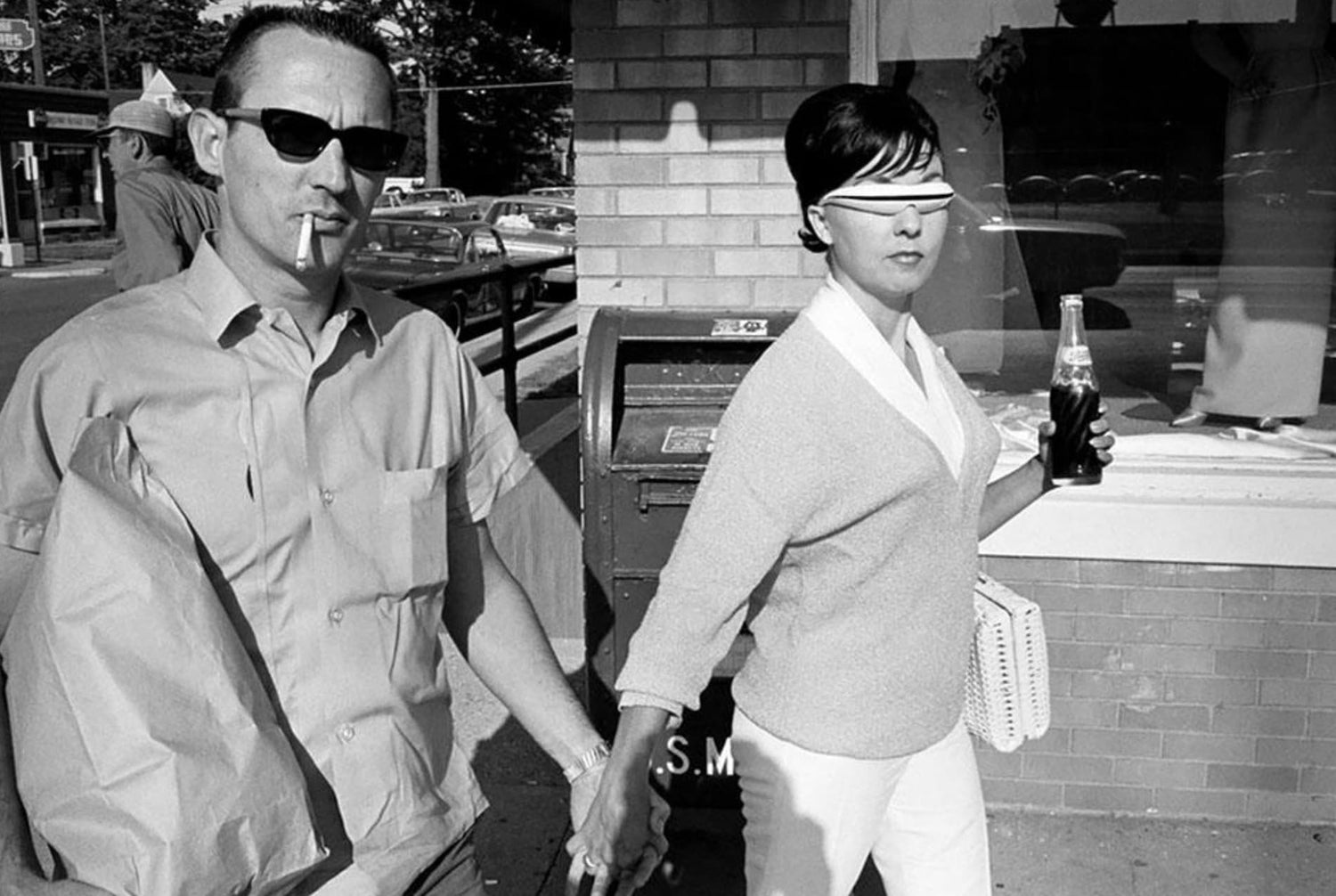
Dark lenses create distance. They conceal the eyes while making the face more recognizable. For a driver stepping out of a helmet and instantly into public view, eyewear becomes another kind of shield.
Across decades, the shapes changed with the sport: oversized aviators in the ’70s, harder geometric forms in the ’80s, aerodynamic wraparounds in the ’90s.
The connection went beyond drivers, too. Automotive design increasingly moved into fashion and accessories, carrying the visual codes of performance, precision, speed, technical materials, off the road and onto the body.
That is where the AZYR archive enters the story.
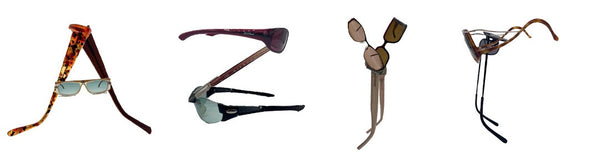
For Austin, AZYR Specs has curated vintage eyewear from the 1970s through the 1990s, including original automotive-branded frames alongside period pieces chosen for their connection to the visual language of racing: aviators, technical constructions, bold lenses and wraparound silhouettes.
These glasses come from the decades that created the aesthetic in the first place.
Formula 1 has changed enormously since 1950. With 24 races across the world as of 2026, with technology and engineering that would have been almost unimaginable to its earliest competitors.
And yet some images remain.
A driver. A machine. The glare of the track.
And a pair of sunglasses between them and the world.
Vintage eyewear from the decades that defined motorsport style.